
EU Aid in Its Current Form Will Not Fix Palestine’s Economy
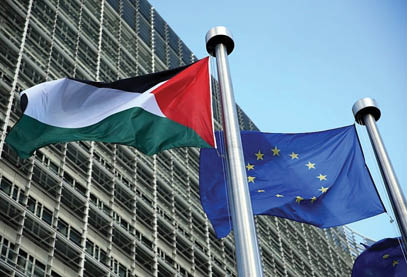
By Alexandra GerasymchukovaBrussels – Financial institutions affiliated with the European Union are increasingly focusing on Palestine to help stimulate sustainable development, create jobs, boost growth, and support post-pandemic recovery. However, despite large investment flows—mostly in the form of loans to the Palestinian private sector—the EU continues to ignore the structural obstacles hindering Palestine’s development. Instead, its aid supports the Palestinian banking system and prolongs the life of a dysfunctional economy under occupation.According to the EU’s recent review of investments in Palestine since 2014, ongoing contributions from "Team Europe"—the EU, its member states, and its public development banks, especially the European Investment Bank and the European Bank for Reconstruction and Development—amount to €1.4 billion ($1.5 billion). Three-fifths of this amount was pledged over the past two years, with loans representing 71% of the total, or about €1 billion.The European Investment Bank, which recently opened a West Bank and Gaza office in Jerusalem, is the largest investor, accounting for €372.3 million—more than a quarter of European funding for Palestine. The EU provided €77.1 million through instruments such as technical assistance, guarantees, and investment grants from the European Sustainable Development Fund. Other major investors include Sweden (€279.5 million), France (€253.2 million), and Germany (€166 million). Considering the EU’s core development aid to Palestine in 2020 was about €241 million, these figures are not insignificant.However, the proportion of non-performing loans among Palestinian small and medium enterprises is rising, and household indebtedness is also increasing, raising doubts about whether more loans can support sustainable economic growth. Instead, this approach risks pulling European aid away from sectors where it is desperately needed, such as civil society funds, cash transfers for impoverished households, or support for public services like education and healthcare.These sectors suffered greatly after the European Commission’s Hungarian commissioner Oliver Varhelyi proposed freezing a large part of the EU aid budget over allegations that some Palestinian textbooks incited violence and hatred—despite an EU-funded study downplaying these claims. After nearly a year of back-and-forth negotiations over conditioning the aid package on education reform, Brussels decided to release the funds. Regardless, the consequences of the freeze were severe and widespread: life-saving treatments for at least 500 cancer patients were halted, cash transfers to up to 120,000 vulnerable Palestinians were suspended, and public sector salaries were cut.Increasing public sector funding was a key factor in Europe’s economic recovery after the pandemic and should play a similar role in Palestine. Israel’s effective annexation of West Bank territories makes public sector support for Palestinian small businesses indispensable. Palestine lacks sovereignty and control over its borders and natural resources, and structural obstacles—from movement restrictions to Israel’s control over Palestinian foreign trade—limit the space for private sector activity. Under the Oslo Accords, Palestinians are effectively trapped in economic dependence on Israel and international aid, without the fiscal space needed for national development.It is unsurprising that the prolonged occupation and short-sighted neoliberal aid policies—with high unemployment, inequality gaps, debt, and worsening poverty—have increased the Palestinian Authority’s reliance on bank loans to cover budget deficits. The Palestinian Authority and public sector employees now account for about 40% of bank credit.This raises further concerns about the €1 billion in European loans, mostly directed toward Palestinian banks and microfinance institutions: a lack of transparency regarding beneficiaries and unclear development gains. While the vast majority of European investments target Palestinian small and medium enterprises, there is also energy sector financing and corporate finance, including for medium-sized firms and real estate developers. Given corruption and crony capitalism within the Palestinian Authority, the risk of marginalizing SMEs cannot be ignored.However, it is unclear whether EU financial institutions require sufficiently detailed lending data from intermediaries. In 2019, the European Commission concluded that the outcomes of European Investment Bank interventions outside Europe largely remain unknown, with other funders facing similar transparency criticisms.European investments in Palestine do have positive elements. For example, the Swedish Guarantee Facility provides optional political risk coverage of 90% of the loan principal in Gaza and Area C. Area C makes up about 61% of the West Bank and contains most of Palestine’s natural resources and fertile land, which are crucial for socio-economic development efforts.But Israeli authority control over the area effectively prevents business activity, and risk-averse banks and financial institutions are unlikely to favor projects there without government incentives. Thus, companies benefit more from additional public support such as subsidies and debt relief plans. However, the number of companies in Area C and Gaza benefiting from the Swedish program is unclear from published data.If Europe wants to promote sustainable development in Palestine, ending the occupation must top its diplomatic priorities. Since a negotiated Israeli-Palestinian peace seems unlikely, the EU should rapidly develop a new aid model better suited to on-the-ground realities.Well-designed, more transparent concessional financing, combined with direct grants and debt relief plans for the productive sector and small businesses—especially those with higher risks and greater social benefits—can support a rights-based economy and protect Palestinians’ presence on their land.The EU can also channel aid to qualified Palestinian public bodies to oversee such investments. Instead of relying on the Palestinian Authority, which has not held elections since 2006, consultations should be conducted with Palestinian civil society, unions, and associations to ensure local needs are met.“If it’s not broken, don’t fix it,” goes the old saying. But given the dire straits of Palestine’s economy, the European aid model desperately needs comprehensive reform.
Supplements
Ismail Zayer Documents the Pioneering and Modernist Role of Exiled Artists
Why the Middle East Understands Putin
Comments List