
A New Map for Iraq-Iran Trade… A Railway Line Between the Two Countries
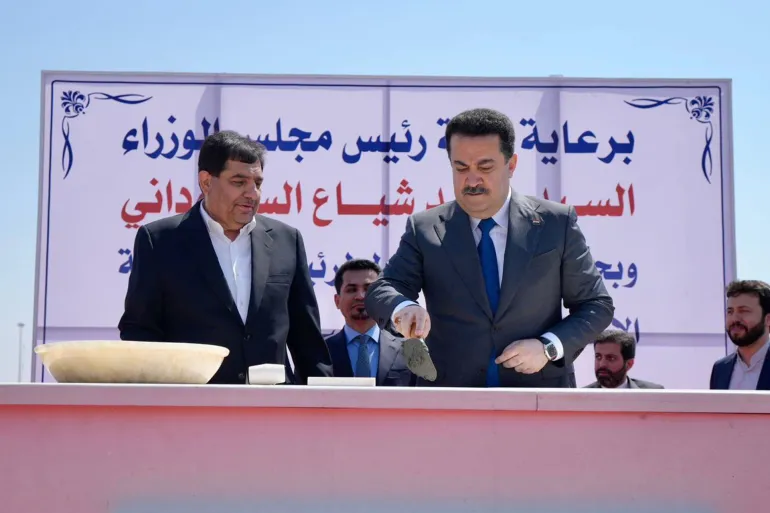
Follow-up – Al-Sabah Al-Jadeed:The Iraqi government’s recent approval of the project to build a railway line linking Baghdad with the Iraqi border crossing at Al-Munthiriya in Diyala province — known on the Iranian side as Khosravi crossing — marks a significant upcoming change in the trade exchange map between the two countries. This railway will shorten the time and effort spent on land transport between Iraq and Iran, whose current annual trade exchange exceeds $11 billion.The Iraqi announcement came last week during a visit by an economic delegation from Baghdad to Tehran. Intensive talks were held regarding railway linkage and cooperation in transportation and economic zones. The delegation was headed by Hazem Al-Khalidi, economic advisor to the Prime Minister, who confirmed that the Baghdad-Khosravi railway project is among Iraq’s strategic priorities, alongside the Basra-Shalamjah railway project.Al-Khalidi added that the project will facilitate the movement of trade and people and strengthen economic ties between the two countries. He pointed out that the current trade volume between Iraq and Iran is about $11 billion annually, with the potential to increase to $25 billion once free zones and joint markets are established.In a press statement published by Iranian media, Al-Khalidi said Iraq seeks to turn its geographic location into a major transit hub, which requires advanced infrastructure to connect with neighboring countries. On the Iranian side, Mohammad Jafar Qaem Banah, Iran’s Executive Deputy President and Acting Minister of Economy, announced Tehran’s readiness to expedite technical and logistical steps to implement the project.In statements reported by Iranian media, he said the Khosravi-Baghdad line could form an important axis of bilateral cooperation. He called for the creation of a free trade zone on the border between Qasr-e Shirin and Khanaqin, emphasizing that Iraq is an indispensable partner in Iran’s regional development vision.Significant Economic ImportanceThe Iraqi Ministry of Transport confirmed the strategic importance of the railway connection project between the two countries, noting that the project evaluation was based on technical and economic grounds.The ministry’s spokesperson, Meytham Al-Safi, said that linkage projects represent a qualitative step in modernizing transport infrastructure and contribute to activating trade exchange and passenger transport.Al-Safi stressed that Baghdad’s government views railway linkage projects as a tool to support the national economy by diversifying revenue sources and reducing reliance on road transport. He added that the railway network’s impact will go beyond transport, enhancing cultural, tourism, and educational exchange, reflecting Iraq’s commitment to integrating into its regional environment through modern and effective transport projects.He explained that the government is fully open and seeks to develop its projects and implementation programs according to scientific and technical standards, taking into account the latest technical and technological developments in the region and the world.Transit Linkage ImportanceRegarding the economic importance of this line, transport expert Basim Al-Khafaji emphasized that the railway connection project between Iraq and Iran through Khosravi crossing is a strategic step toward transforming Iraq into a major regional transit corridor, leveraging its geographic location between East and West.Al-Khafaji explained that the crossing enjoys a distinct logistical location, as it lies on direct railway links with Baghdad. Integrating this crossing into the Iraqi railway network — especially if linked with the “Development Road” project — will turn Iraq into a vital gateway for regional and international trade.According to Al-Khafaji, the importance of transit lies in providing Iraq with sustainable economic revenues without requiring large-scale exports or industries; it suffices for the government to manage transit corridors efficiently and invest in infrastructure and customs digitization to make transit fees a sovereign income source.He noted that Iran seeks through this linkage to reach new markets via Iraqi lands. Meanwhile, Iraq can impose conditions serving its economic and sovereign interests. Al-Khafaji said the success of the project depends on a comprehensive vision for transit management: the more it is planned as part of an integrated transport and trade system, the more Iraq becomes an indispensable economic hub in the region.Iran as the Biggest BeneficiaryEconomic expert Ziad Al-Hashimi said the Iranian railway link toward Iraq cannot be viewed separately from Iran’s regional expansion strategy. He noted that the project is an extension of Iran’s policy to assert its economic and political presence through a strategic transport network aimed at the Mediterranean via Iraqi territories.Al-Hashimi explained that the link from Khosravi crossing to Baghdad, now marketed as part of economic cooperation between the two countries, hides broader goals related to Iran’s desire to deliver its exports to Syrian ports — a plan that dates back to 2002.He added that recent political changes in Syria disrupted the Iranian plan and closed a key part of the western corridor, pushing Iran to focus more on Iraq as an alternative route for its exports.Al-Hashimi pointed out that the proposed railway link is not limited to Iraq but may in the future intersect with the “Development Road” project, which aims to connect Iraq to Europe via Turkey.He explained that such an intersection offers Iran a golden opportunity to deliver goods to European markets through Iraqi lands, bypassing the costly sea route via the Arabian Gulf, Bab el-Mandeb, and the Suez Canal.He indicated that Iran will be the biggest beneficiary of this linkage, gaining a fast and low-cost transport network to export goods to Iraq and other countries, while Iraq’s benefit remains very limited due to weak local industry and production.He concluded with a warning that Iraq might become merely a transit corridor without real gains unless Iraqi production bases are strengthened and these projects are linked to tangible developmental interests.
Economic Affairs
A New Map for Iraq-Iran Trade… A Railway Line Between the Two Countries
Basra Crude Prices Decline Amid Global Oil Drop
Oil Prices Drop 3%... July Brent Falls Below $60

Globally... U.S. Dollar Declines as Taiwanese Currency Hits Multi-Month High
Comments List